

Everything posted by Matt
-
I'd really like to find a way to share the same comment stream between both.
-
It's mostly for our internal teams to use in a pinch, we generally create apps to make use of the listener/widget/events system.
-
 Pages is one of Invision Community’s most powerful features, allowing easy creation of blogs, knowledge bases, documentation, bug trackers and more. With the new Workflow Manager, it just got a whole lot more powerful. WorkflowsWorkflows enable you to perform multiple actions from a single button, triggered by criteria you define. For example, staff can process, approve, reject or update records with a single click, rather than manually working through several steps. This video walks you through setting up "Approve" and "Reject" buttons in a bug tracker. Match CriteriaWhen you create a workflow, you define the match criteria that control which records show the button. In our video, the "Approve" button should only appear on newly submitted bug reports. Once a report is already approved or closed, the button is no longer relevant, so it simply does not show. Criteria can be based on the item's status (hidden, pinned, featured, and so on) or on the value of a custom field, giving you precise control over when each workflow is available. ActionsThe next step is to configure the actions that fire when the button is clicked. You can mix and match as many as you need: Post a reply on the record Change the value of a custom field Change the item status (pin, hide, feature, and so on) Notify the item author Notify specific members Assign the item to a member or team If any action needs input from the person running the workflow, such as writing a custom reply, a small dialog will prompt them before the actions run. Putting it togetherWith the buttons configured, a single click can mark a bug report as accepted, post a public reply for the author, and fire a webhook to create an issue in GitHub automatically as every time a workflow runs, Invision Community fires an event, meaning you can connect workflows to external tools and services without writing any custom code. Beyond a bug trackerWorkflows are available for any Pages database. An approval process for submitted articles, a content review pipeline for a knowledge base, or a simple "mark as resolved" button for a support request database are all straightforward to set up. If you use a database to manage form submissions, a single workflow can update multiple fields and send a notification to whoever needs to take action next. Workflows are available for Creator Pro, Teams, Business and Enterprise.
-
Pages is one of Invision Community’s most powerful features, allowing easy creation of blogs, knowledge bases, documentation, bug trackers and more. With the new Workflow Manager, it just got a whole lot more powerful. WorkflowsWorkflows enable you to perform multiple actions from a single button, triggered by criteria you define. For example, staff can process, approve, reject or update records with a single click, rather than manually working through several steps. This video walks you through setting up "Approve" and "Reject" buttons in a bug tracker. Match CriteriaWhen you create a workflow, you define the match criteria that control which records show the button. In our video, the "Approve" button should only appear on newly submitted bug reports. Once a report is already approved or closed, the button is no longer relevant, so it simply does not show. Criteria can be based on the item's status (hidden, pinned, featured, and so on) or on the value of a custom field, giving you precise control over when each workflow is available. ActionsThe next step is to configure the actions that fire when the button is clicked. You can mix and match as many as you need: Post a reply on the record Change the value of a custom field Change the item status (pin, hide, feature, and so on) Notify the item author Notify specific members Assign the item to a member or team If any action needs input from the person running the workflow, such as writing a custom reply, a small dialog will prompt them before the actions run. Putting it togetherWith the buttons configured, a single click can mark a bug report as accepted, post a public reply for the author, and fire a webhook to create an issue in GitHub automatically as every time a workflow runs, Invision Community fires an event, meaning you can connect workflows to external tools and services without writing any custom code. Beyond a bug trackerWorkflows are available for any Pages database. An approval process for submitted articles, a content review pipeline for a knowledge base, or a simple "mark as resolved" button for a support request database are all straightforward to set up. If you use a database to manage form submissions, a single workflow can update multiple fields and send a notification to whoever needs to take action next. Workflows are available for Creator Pro, Teams, Business and Enterprise. View full blog entry
-
Manual PHP is available on Enterprise.
-
The Page Builder makes it easy to create attractive pages with widgets, custom HTML and Invision Community data. One of the most-used block types is the custom HTML block, which lets you drop markup anywhere on a page. However, if you want to use the same design in multiple places, perhaps a feature card, a promotional banner, or a testimonial, you have to create a separate block each time and maintain them individually. Template Blocks solve that. How Template Blocks workA Template Block combines a custom HTML template with a set of fields you define. Instead of hardcoding the content, your template uses placeholders. Each time you place the block on a page, you fill in the fields and the template renders with that content. Setting one upStart by creating a new block and choosing the Template Block type. Define the fields you need such as a heading, an image URL, a short description, whatever your design calls for. Write the HTML template, using the field placeholders. as Save the blockOnce saved, it works like any other block in the Page Builder. Drop it onto a page, click Edit, fill in the fields and save. Drop it again somewhere else and give it completely different content. A practical exampleSay you have a "Featured Member" card used in several places across your community. With a Template Block, you design the card once and fill in a different member's name, photo and bio each time you place it. Update the card's design and update every instance accordingly. Template blocks can be a great way to simplify the number of blocks you have, and make it much easier to edit once on the page in the future. We would love to hear how you use Template Blocks in your community. Share your ideas in the comments below. View full blog entry
-
 The Page Builder makes it easy to create attractive pages with widgets, custom HTML and Invision Community data. One of the most-used block types is the custom HTML block, which lets you drop markup anywhere on a page. However, if you want to use the same design in multiple places, perhaps a feature card, a promotional banner, or a testimonial, you have to create a separate block each time and maintain them individually. Template Blocks solve that. How Template Blocks workA Template Block combines a custom HTML template with a set of fields you define. Instead of hardcoding the content, your template uses placeholders. Each time you place the block on a page, you fill in the fields and the template renders with that content. Setting one upStart by creating a new block and choosing the Template Block type. Define the fields you need such as a heading, an image URL, a short description, whatever your design calls for. Write the HTML template, using the field placeholders. as Save the blockOnce saved, it works like any other block in the Page Builder. Drop it onto a page, click Edit, fill in the fields and save. Drop it again somewhere else and give it completely different content. A practical exampleSay you have a "Featured Member" card used in several places across your community. With a Template Block, you design the card once and fill in a different member's name, photo and bio each time you place it. Update the card's design and update every instance accordingly. Template blocks can be a great way to simplify the number of blocks you have, and make it much easier to edit once on the page in the future. We would love to hear how you use Template Blocks in your community. Share your ideas in the comments below.
-
Yes, you could create a Pages page and use that, with anything you want embedded via a HTML widget. Or you could create a database and use that to hold the contact requests, and set up any custom fields you need and edit the form template (if required).
-
I can reply in more detail later, but this is a fairly common request. You can use javascript to detect the browser language of the person viewing, so you could create a little HTML widget with just javascript in it to detect the browser's language, if it doesn't match the current language, display a modal/box on the page to offer them to go to the correct page.
-
Hi Kate, You can submit a ticket via the client centre: https://invisioncommunity.com/clientarea
-
Yeah, good idea that.
-
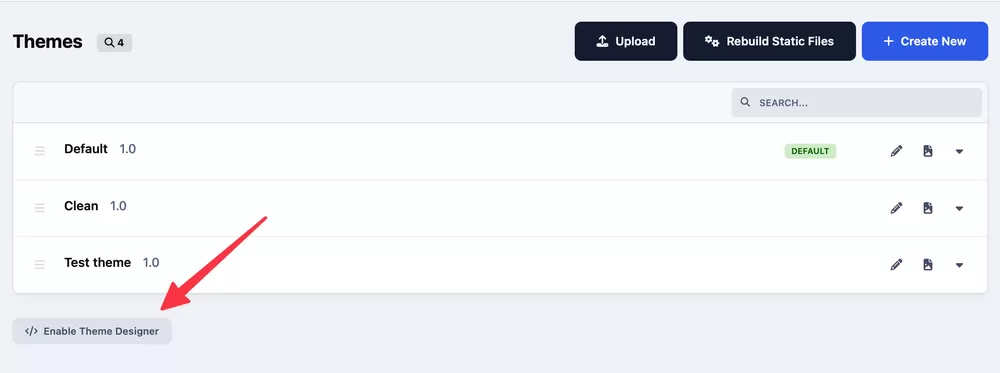
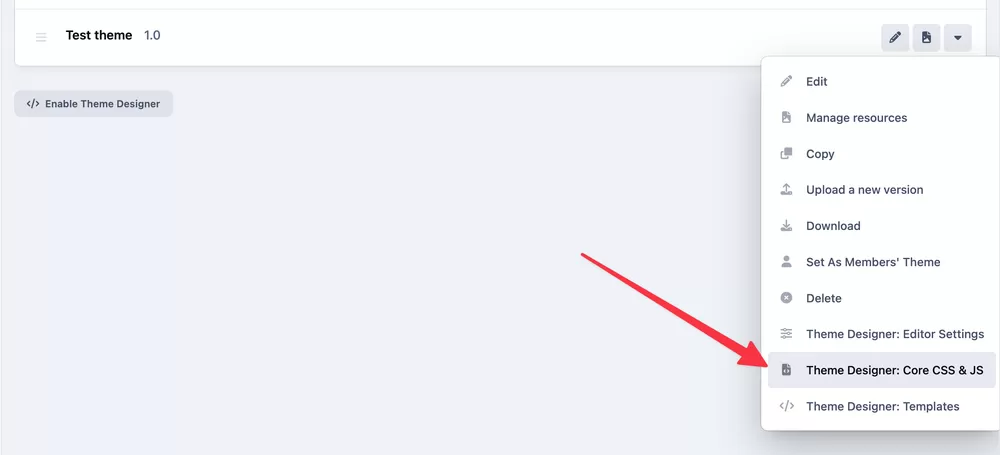
CSS is per-theme, but you can add it into the AdminCP > Theme area too.
-
As above, most AI bots are allowed to crawl much like search engines. There are a few specific ones (Claude, etc) that consume a lot of resources when they're directed to a website, so those are blocked for now. We are looking to bring a MCP server and extended AI access for an additional monthly fee to cover the increased database/origin hits.
-
Was it this? https://invisioncommunity.com/4guides/themes-and-customizations/template-syntax/introduction-to-template-syntax-r137/
-
The simplest way would be to use member groups to create a group that has access to courses, and then get Zapier to change their member group on purchase/expiration.
-
Thats a CSRF key mismatch. It might occur if the user does not have javascript enabled.
-
It can be done without any custom coding. All you need to do is use Group Promotions. Rename your "Members" group to "Onboarding". When members sign up, they are put into the onboarding group with very little permission. You can use a Pages page as the default page for the Onboarding group which states they need to do a course to complete their onboarding. Then, create a new group called "Members with all the permissions relevant for them. Use Group promotions to move members from Onboarding to Members once they complete the course. That's it! It'll then move members when the course is completed while restricting access to the full content of your community.

-
You could use alerts: https://invisioncommunity.com/docs/staff-moderation/the-moderator-cp-r154/#6-alerts
-
Hi Steve, Elasticsearch was forked by AWS into Opensearch when Elasticsearch changed from open source. There are a few variances, including the document format, which means that technically, our Elasticsearch extension is now for Opensearch. This means that it's unlikely in the short term that we'll update Elasticsearch, but we will very likely update Opensearch. A quick test looks like we just need to remove the maximum version check and it'll be fine on 3.x.
-
I manually moved some content around when we restructured the forums, which seems to have.. broken something. I'm rebuilding the index now.
-
This is an area we have plans to improve. Our current search implementation is based on database lookups which is fine, but given the advances in intelligence, it's fair to want something more. As always, cost is a big driver of decisions. We could easily and quickly build a connector to a popular AI engine to vectorise and pull results but on large communities with hundreds of thousands of posts and content that would eat tokens and burn through money in no time. I ran the numbers quickly and to store in a vector database and fetch the top 50 matches using an AI agent such as Claude, it'd cost around $200/month for a 500k post database. That'd get you a quick solution but a very expensive one. We also have complications such as our rich permission functionality, our comprehensive search filters and the activity stream which uses the same underlying technology. Essentially, we'd have to strip back some of the stream features and pull out the text and put that elsewhere. The short version is - we're on it but it won't be something that's coming in a minor release and it'll likely be offered as a paid option for our Cloud customers. In the short term, if you could share what you're trying to search for, then there may be ways to squeeze more out of our current system.
-
They switched things around so their Fanatec brand got an independent community. We obviously cannot say too much but that's the outcome.
-
It's here: https://forum.fanatec.com We have have many enterprise clients that we are partners with. This entails regular calls, project management, etc. We do not advertise them outside of the logos unless we request a case study (Gatorade). There are NDAs in place for most of them.
-
I speak to LEGO every week, they have a community for their local user groups.
-
I can't promise detailed docs on the PHP framework, but there's room for improvement on a lot of other areas.